You are here
Summary
 The 20th International Digital Curation Conference Summary
Introduction
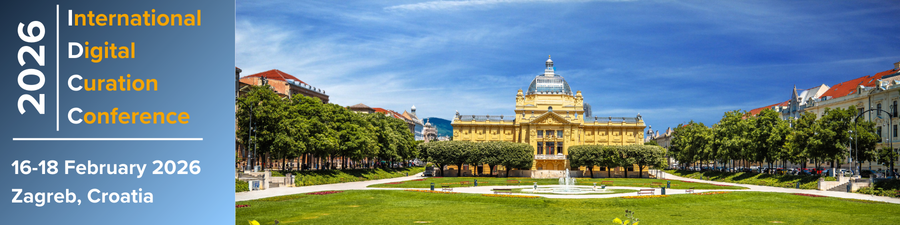
The city of Zagreb, Croatia hosted the 20th International Digital Curation Conference (IDCC26) from February 16-18, 2026. The theme for IDCC26 was: "AI, austerity, and authoritarianism: contemporary challenges in digital curation".
- Programme
- Paper and poster winners
- Attendee Statistics
- Workshop Day
- IDCC26 Sponsors
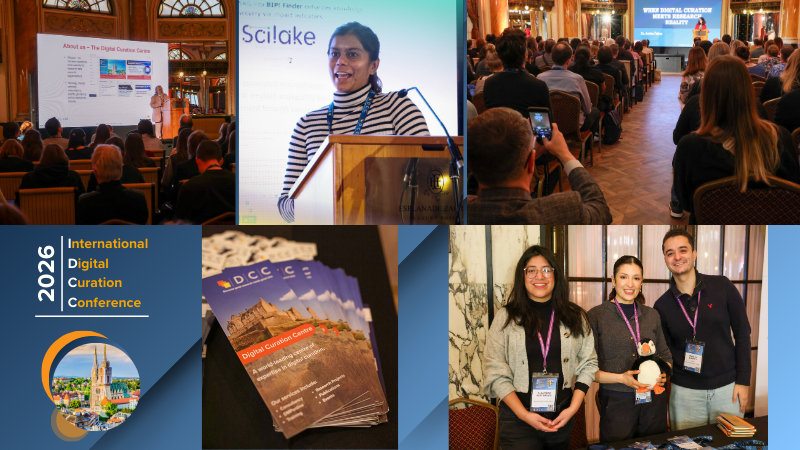
- Conference Photographs

Programme
The conference theme, AI, austerity, and authoritarianism: contemporary challenges in digital curation was intended to focus the programme, shape submissions, and guide reviewers. It aims to address one or more aspects of digital curation yet was still broad enough to attract a range of proposals from across the community and cover diverse curation activities.
This year’s call included a deliberate political element that has not been present in earlier IDCC calls. Aligning it with contemporary political phenomena carried risks, yet it was hard to avoid given the themes that emerged at the 2025 conference in The Hague. That conference took place a month into the second administration of President Trump in the United States, where the Data Rescue Project was already organising to capture federal government datasets before they could disappear or be potentially altered. It also unfolded amid Dutch government proposals to cut support for research data infrastructure posts, and amid significant investment in commercial AI platforms and services that could transform digital curation workflows and practices.
Although the call mentioned AI, austerity, and authoritarianism, proposals did not have to address any of these themes directly. As always, contributors were invited to reflect on changes across the field, consider ongoing developments, and think about emerging challenges for the next generation of digital curation, practice, and policy.

Paper and Poster Winners
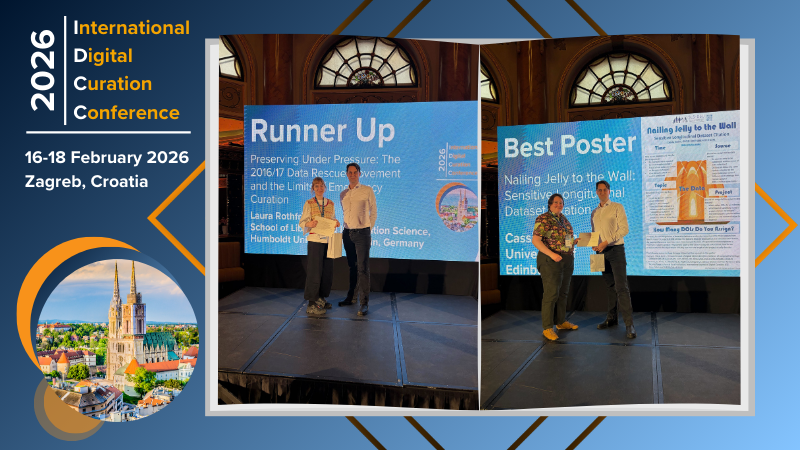
Pictured left to right, Laura Rothfritz, Humboldt University Berlin (left), Laurence Horton, DCC (second from left), Eve Cassia Smith, University of Edinburgh (second from right)
The paper awards were decided by the Programme Committee based on the scores and comments of the programme reviewers.
Best Paper
The best paper at IDCC26 was evaluated by reviewers as a “a strong and innovative contribution showcasing an area of research that hasn’t been tackled before,” and “of significant value to the conference, as multiple stakeholders can relate to it.”
Best paper: Michael Groenendyk, Concordia University, Canada, for “A Citation Analysis of Government of Canada Open Data in Academic Literature: Leveraging AI for Open Data Archive Impact Assessment”.
Paper Runner Up
The runner‑up best paper engaged closely with this year’s theme, reflecting on a past data rescue initiative, and how its lessons inform current preparedness.
Laura Rothfritz, Humboldt University Berlin, for “Preserving Under Pressure: The 2016/17 Data Rescue Movement and the Limits of Emergency Curation”.
Best Poster Winner
The best poster, voted for by conference attendees, used the conference app Eventify.
Cassia Smith, University of Edinburgh, “Nailing Jelly to the Wall: Sensitive Longitudinal Dataset Citation”.
Programme Contributions:
This year a pool of 88 reviewers from across our community helped to shortlist the programme contributions made up of papers, lightning talks and posters.
- Papers: 21
- Lightning Talks: 26
- Posters: 36
How to access slides and posters
Posters, paper and lightning talk slides can be accessed via the IDCC26 Conference Materials Zenodo collection.

International Representation
IDCC26 continued a longstanding tradition of showcasing worldwide research projects with 30 countries represented:
- United Kingdom (26%) - Leading participant numbers, reflecting its strong academic and professional engagement in digital curation.
- United States (9%) - Traditionally a well-represented region in previous IDCCs.
- Croatia (8%) - As the host, showing significant growth in digital curation interest.
- Germany (6%), Netherlands (5%), Japan (5%) - Each contributing specialised expertise from across Europe and Asia.
Attendee Dynamics:
- First-time Attendees: 56% of the participants were newcomers, indicating a growing interest in the digital curation field.
- Returning Attendees: Help maintain continuity and deepen the community's collective expertise.
Organisational Representation
Whilst the majority of IDCC26 attendees continued coming from academic institutions, we were delighted to see representation from research and development organisations, archives and technology and software providers:
- Academic Institutions (60%)
- Research and Development Organisations (13%)
- Libraries, Archives, and Information Services (11%)
- Technology and Software Providers (4%), Data and Content Repositories (4%), Other (4%), Government Agencies (3%)
This vibrant mix of global perspectives and organisational backgrounds underlined IDCC26’s role as a platform for international collaboration and innovation in digital curation.

Workshop Day
Overview
The workshop day set the stage with seven community led sessions, ranging from data management plan innovations to sustainable infrastructure discussions, each tailored to furthering practical and theoretical understanding in digital curation.
On Monday, 16 February, the workshop day saw over 150 in-person attendees across the following topics:
- Workshop 1 - Linking it all together: DMPs, SKGs, and FAIR Assessment with OSTrails Interoperability Frameworks - OSTrails
- Workshop 2 - Structuring and understanding the activities, functions, and processes of repositories and archives - EOSC EDEN and FIDELIS
- Workshop 3 - Resilient by Design: Exploring Paths to Sustainable Infrastructures - Base4NFDI
- Workshop 4 - Key role of vertical interoperability in times of austerity: Linking DMPonline RSpace, and repositories to enable FAIR data workflows - DMPonline and RSpace
- Workshop 5 - Curating data and models to facilitate greater re-use within a research environment using DAFNI - STFC and UKRI
- Workshop 6 - Be ASSURED! Doing safe research with unsafe data – ASSURED
- Workshop 7 - Evolving data management plans (DMPs): Smart, active, integrated, useful - PSDI
We would like to extend our thanks to all the workshop organisers and attendees for their time on the first day of the conference. More information on the workshops can be found on the Workshop subpage.

Social Events
Dedicated social events at IDCC always play a crucial role in allowing our international delegates to network. This started after the workshop day with a pre-conference drinks reception at the Esplanade Hotel. At the end of the first main conference day, we hosted a conference dinner at the Garden Brewery, joined by 150 attendees, providing another excellent opportunity for knowledge exchange and camaraderie along with a tour of the brewery.
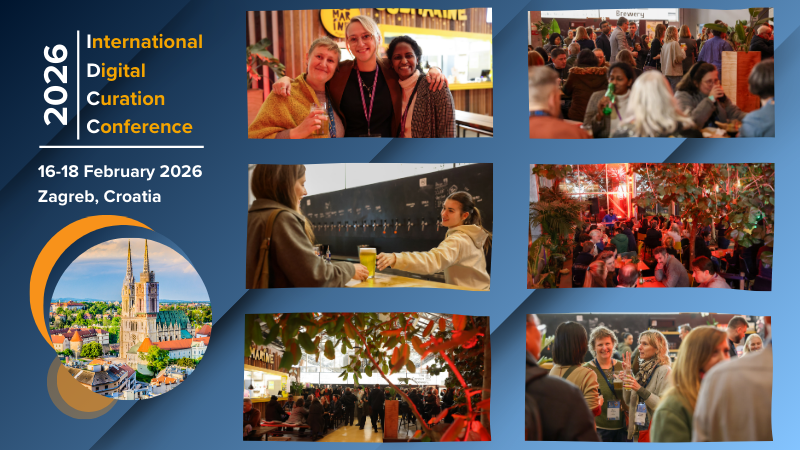
A selection of images taken on the night of the conference dinner at the Garden Brewery.

IDCC26 Sponsors
Thank you to all of our sponsors for supporting IDCC26.
Silver Sponsor – Artefactual Systems Inc
Artefactual Systems Inc is a Canadian-based professional services and open source software development company. The team are dedicated to the stewardship of open source digital access and preservation software. Access to Memory (AtoM), Archivematica, and Enduro are the projects for which Artefactual is most well-known.
Their goal is to help cultural memory persist over time and space by ensuring that the evidence of the past can be cared for in the present and trusted in the future. For Artefactual Systems, digital access and preservation are solved problems; they are an ongoing practice. Consequently, their software is only a means to an end. Their aim is for data to outlast the systems that built, preserved, or stored it so that it’s usable into the future.
They strive to be the most trusted partner for those who care for the world’s cultural memory by building knowledge, networks, and tools and by contributing openly to a global community of practice.
Silver Sponsor – UK Data Service
The UK Data Service is the UK’s principal repository for economic, population, and social research data, hosting the nation’s largest trusted digital archive. Built on nearly sixty years of sustained investment by the Economic and Social Research Council (ESRC), the Service provides unparalleled expertise in the collection, preservation, and dissemination of high-quality data.
Its meticulously curated holdings include nationally and internationally significant datasets such as the Census, Understanding Society, the UK Cohort Studies, the Labour Force Surveys, and the Family Resources Surveys. These resources, drawn from governments, the Office for National Statistics, and diverse funders and data owners, underpin world-class research and teaching across disciplines.
As pioneers in digital curation and data literacy, the UK Data Service actively manages long-term access to research data, ensuring that social science scholarship remains robust, transparent, and reusable. At IDCC26, the Service shared insights into advancing sustainable infrastructures and fostering collaboration between libraries, researchers, and institutions to strengthen the global digital curation community.
Bronze Sponsor – Frontiers
Frontiers is one of the world’s largest and most impactful research publishers, dedicated to making peer-reviewed, quality-certified science openly accessible.
Frontiers FAIR² Data Management enables you to transform your data into discoverable, reusable, open, and citable contributions. Our interactive platform effortlessly brings research data to life through intelligent data curation, visualisation and AI-assisted generation of a FAIR² Data Article. Gain recognition for your work, all within one secure, integrated system.
Conference Photographs
Photographs from conference images have been uploaded to our Flickr page.